


Project: Dutch Slough
A Landscape Restored
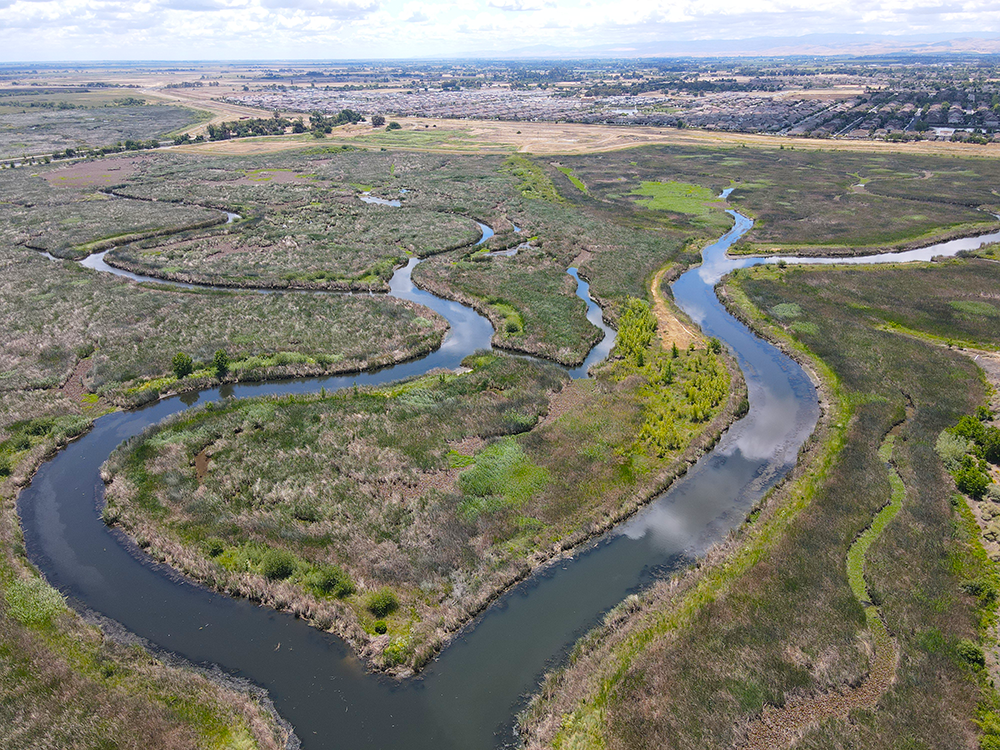
At the western edge of the Sacramento-San Joaquin Delta, Dutch Slough is becoming a landscape shaped once again by water. The approximately 1,166-acre restoration project is transforming former cattle ranch and dairy land into tidal wetlands, channels, riparian areas and upland habitat. Restoring natural tidal processes creates opportunities for native plants and wildlife to return while strengthening connections throughout the Delta.
For CCRCD EcoStewards, Dutch Slough is also a place to observe restoration in action. The landscape is changing as vegetation becomes established, water moves through newly restored areas and wildlife responds to new habitat. These changes take time, and successful restoration depends on more than construction. It requires continued care, observation and learning.
EcoStewards contribute to that ongoing effort through hands-on stewardship and field-based work, helping connect the larger vision of restoration with the everyday care of a living landscape.
Stewardship in Action
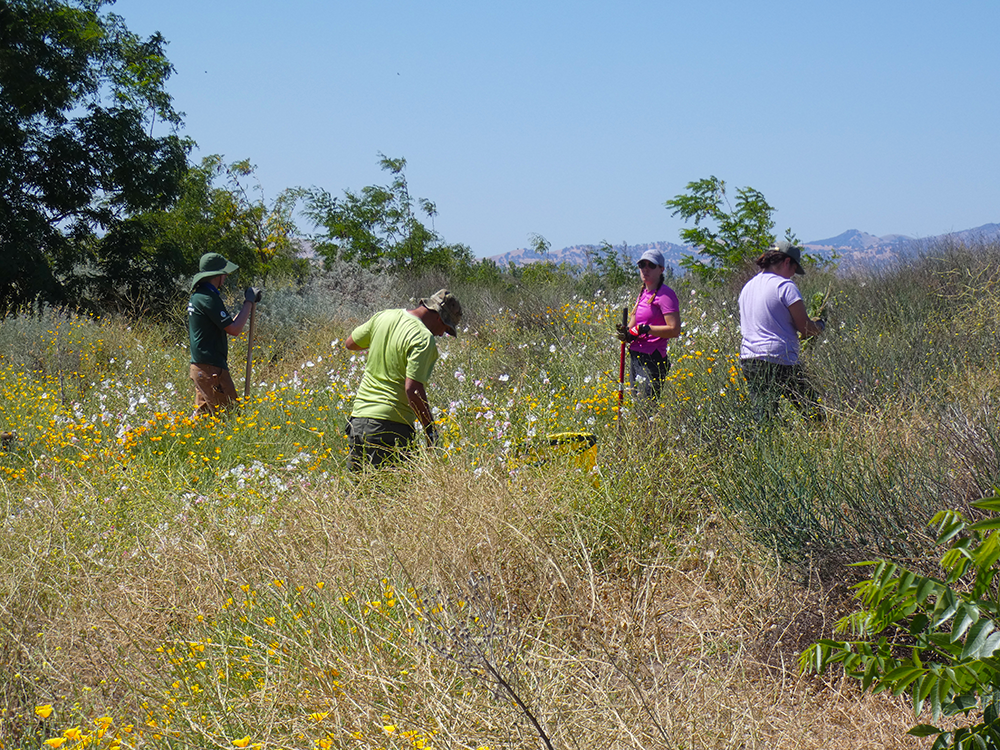
Restoration creates the conditions for habitat to return, but maintaining that habitat requires ongoing work. EcoStewards bring a hands-on approach to Dutch Slough, helping care for native vegetation and address invasive plants that can quickly overwhelm newly restored areas.
Field work may include removing invasive vegetation, caring for native plants, supporting revegetation and observing how different species respond to changing conditions. Tools are simple, but the work is important: a shovel, rake or weed-whacker can help give native plants room to establish and create the structure that wildlife needs.
This work also gives EcoStewards an opportunity to learn directly from the landscape. Each visit provides another snapshot of how restoration is progressing and what areas may need additional attention.
By returning to the site over time, EcoStewards become part of the long-term process of helping restored habitat mature and remain healthy.
Connecting Creek and Delta
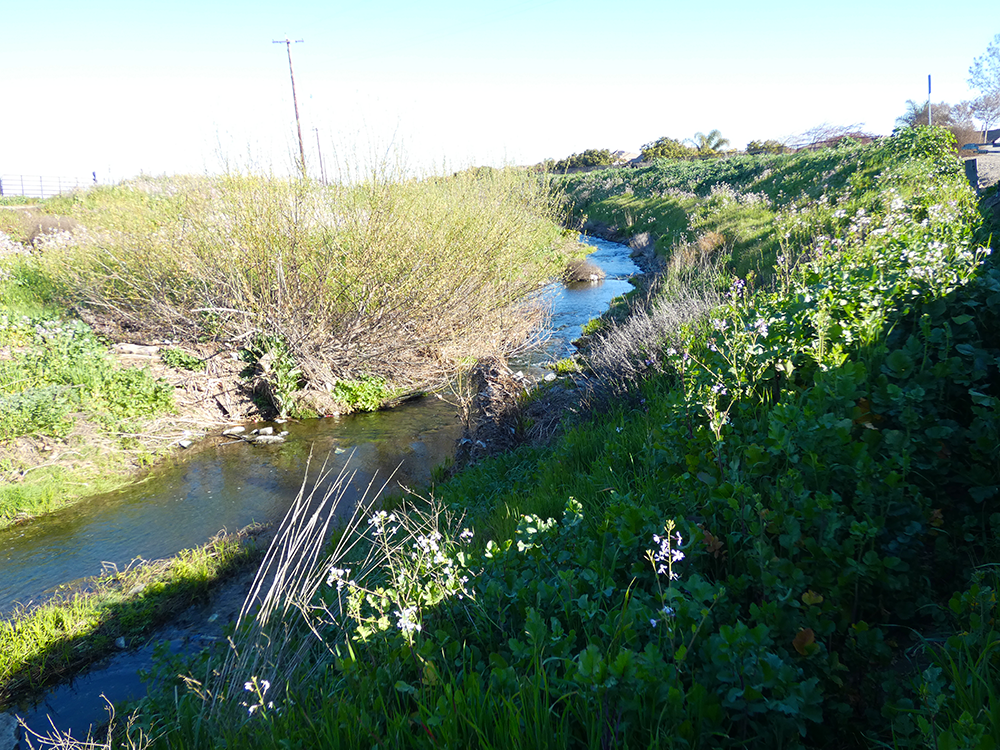
Dutch Slough is more than an isolated restoration site. It lies at the mouth of Marsh Creek, creating an important connection between Contra Costa County's inland watershed and the tidal waters of the Delta.
That connection is especially meaningful to CCRCD. Through its Marsh Creek Watershed work, the District looks at conservation across the watershed rather than treating individual habitats as separate places. Water, nutrients, plants and wildlife move across these boundaries, linking upstream creeks with downstream wetlands.
EcoStewards help bring that larger perspective into the field. Their work at Dutch Slough provides an opportunity to see how conditions within one part of the watershed can influence another, while hands-on stewardship helps strengthen habitat where these systems meet.
For visitors and volunteers, the site offers a tangible way to understand that healthy watersheds do not stop at a project boundary. They are interconnected systems extending from upland creeks to the Delta.
Growing Native Habitat
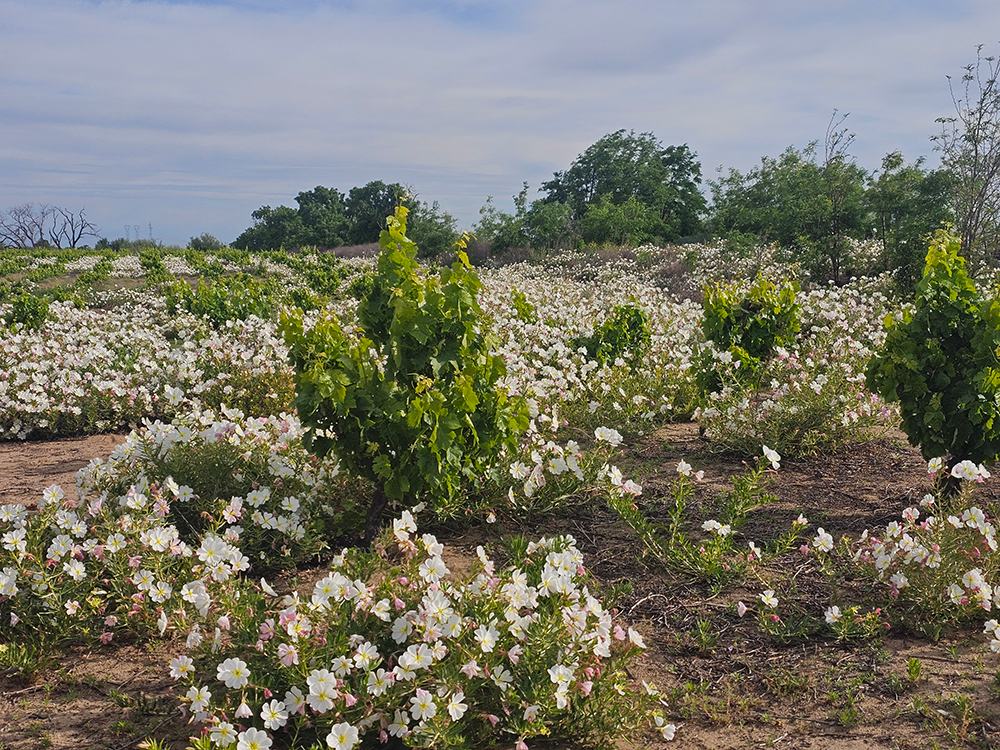
Native plants are the foundation of Dutch Slough's recovering habitats. Across the restoration area, thousands of trees, shrubs and marsh plants are helping establish the vegetation communities that once characterized portions of the Delta.
EcoStewards support this process by helping care for native plantings and managing invasive species that compete for space, water and sunlight. Wetland plants such as tules help create marsh structure, while trees and shrubs including valley oak, elderberry, cottonwood and willow contribute to riparian and upland habitat.
As these plants grow, they do much more than make the landscape greener. Their roots stabilize soil, their leaves and stems provide shelter, and their flowers, seeds and other organic material contribute to the food and habitat resources used by insects, birds and other wildlife.
For EcoStewards, nurturing native vegetation is an investment in the many layers of life that depend on it.
Restoring the Food Web
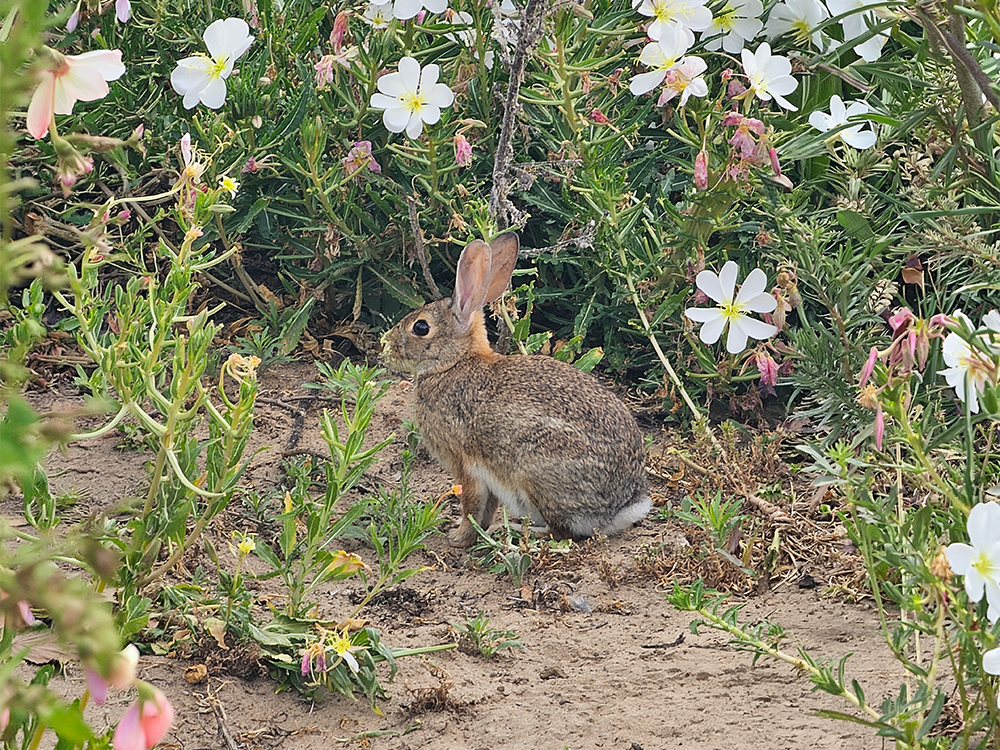
Healthy habitat is ultimately about more than plants. As native vegetation becomes established at Dutch Slough, it creates the foundation for a much larger ecological community.
Marsh plants and riparian vegetation provide food and shelter for insects and other small organisms. Those organisms, in turn, support fish and birds, helping rebuild the interconnected food web that makes a functioning wetland possible.
The restored landscape is intended to benefit a wide range of Delta wildlife, including Chinook salmon, Delta smelt, Sacramento splittail and native birds that depend on wetland and riparian habitat. Even species that may be easy to overlook play important roles in this system.
EcoStewards contribute by caring for the habitat at its foundation and observing the wildlife that uses it. Their field work helps reveal how restoration is translating into real habitat benefits and reminds us that every plant, insect, fish and bird is part of a much larger story.
Learning From Restoration
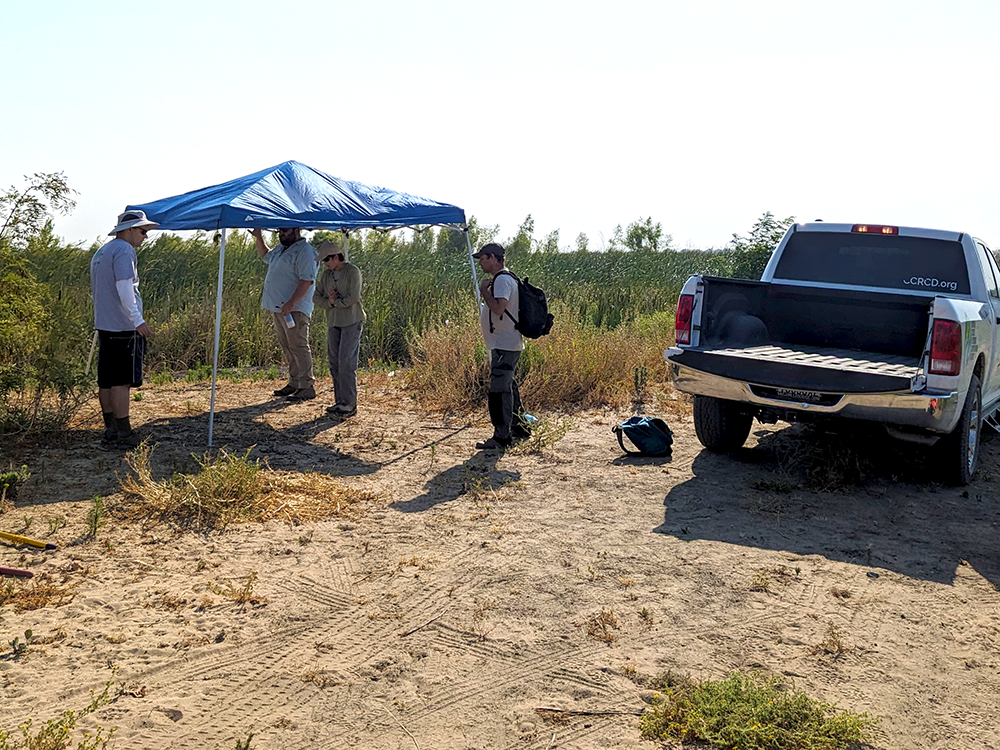
Dutch Slough provides an opportunity to watch a restored ecosystem develop over time. For EcoStewards, that means restoration is not simply something to complete, it is something to observe, measure and learn from.
Field observations can reveal which native plants are establishing successfully, where invasive species are returning and how wildlife is responding to changing habitat. Repeated visits provide a record of those changes and help identify where additional stewardship may be needed.
This hands-on approach connects ecological science with practical conservation. Instead of viewing restoration as a finished product, EcoStewards can see the landscape as a living experiment, with each season offering new information.
What is learned at Dutch Slough can also contribute to a broader understanding of Delta restoration. By documenting conditions in the field and adapting stewardship practices as the landscape changes, EcoStewards help turn day-to-day observations into knowledge that can support future conservation efforts.

Adam Gelfand
Skills: Field Data Collection, Tree Physiology, Habitat Monitoring, Outreach.
Fun Fact: Loves to cook Middle Eastern food, surf, write folk music, and doesn't think the wilderness exists.
Adam Gelfand
Adam grew up in New Jersey where they spent their childhood looking for bugs and coming up with new names of plants. Their first ecological position was selling Christmas trees as a teen. Afterwards, they went to Warren Wilson College in Asheville, NC where they spent four years working on an organic vegetable farm and earning a degree in Environmental Education. Seeking a way to be of service during the pandemic, they then moved to New York City to teach conservation biology to communities traditionally underserved by environmental education. Adam has grown to identify as an ecologist and conservationist who sees the world through the eyes of trees. They recently earned a graduate degree where they studied the relationship between Indigenous fire history, carbon sequestration, forest compositional shifts, and tree rings. Adam is excited to join CCRCD and face all the exciting challenges that come with restoring habitats.

Jules Mackey
Skills: Camera trapping, California wildlife and plant identification, data management, conservation education.
Fun Fact: Loves birding, rock climbing, fashion, hiking, and cooking Filipino food.
Jules Mackey
I grew up spending a lot of time exploring nature in my hometown, San Diego, and while camping throughout the western United States.
My passion for conservation led me to pursue an education at UC Davis, where I graduated in 2022 with a B.S. in Environmental Science & Management, and a minor in Wildlife, Fish, and Conservation Biology. Prior to joining CCRCD, I've performed field monitoring in the Delta and Bay area. At CSTARS, I collected GPS points of native and invasive plant species in the Delta in order to develop aerial vegetation identification tools. As a field researcher with the UC Davis Road Ecology Center, I collected camera-trap data and analyzed the impacts of Interstate 580 on East Bay wildlife communities.
I'm driven by a passion for urban ecology, environmental justice, and the restorative power of nature to communities and people. I am excited to bring my skills and passion to my work with CCRCD.

Elena Rich
Skills: California wildlife and plant identification, wildlife camera trapping, heavy equipment and power tool operation, community engagement and education, data management.
Fun Fact: Loves birding, gardening, hiking, tidepooling, and game nights with friends and family.
Elena Rich
Elena grew up in the East Bay and spent much of her childhood hiking and exploring the local oak woodland open space, where her love of nature developed.
Elena is fascinated by the challenge of stewarding habitat in novel ecosystems. She studied at UC Davis, receiving a B.S. in Environmental Science and Management in 2024. While in college, she worked at the UC Davis Arboretum and Public Garden for three years, first at the nursery and later as a waterway stewardship apprentice at the Arboretum Waterway. There, she gained experience in plant care, restoration, wildlife monitoring, and habitat management in a human-dominated landscape.
Elena began working at the CCRCD in 2024. She has enjoyed exploring and stewarding new areas of her home county, such as Dutch Slough in Oakley. Working outside nearly every day, she is grateful to have the opportunity to foster such an intimacy with the ecology of Contra Costa County.

Molly Clemons
Skills: Habitat restoration, invasive weed control, California wildlife and plant identification, natural resource management, ArcGIS mapping software.
Fun Fact: Enjoys hiking, birding, gardening, and kayaking
Molly Clemons
Molly is an Ecosteward Conservation Technician. She received a B.S. in Environmental Science at Sonoma State University in 2023. She served with AmeriCorps, California Climate Action Corps at St. Mary's College in Moraga CA, during the past year. As a California Climate Action Corps fellow her primary duties were in garden management, education, and community engagement.